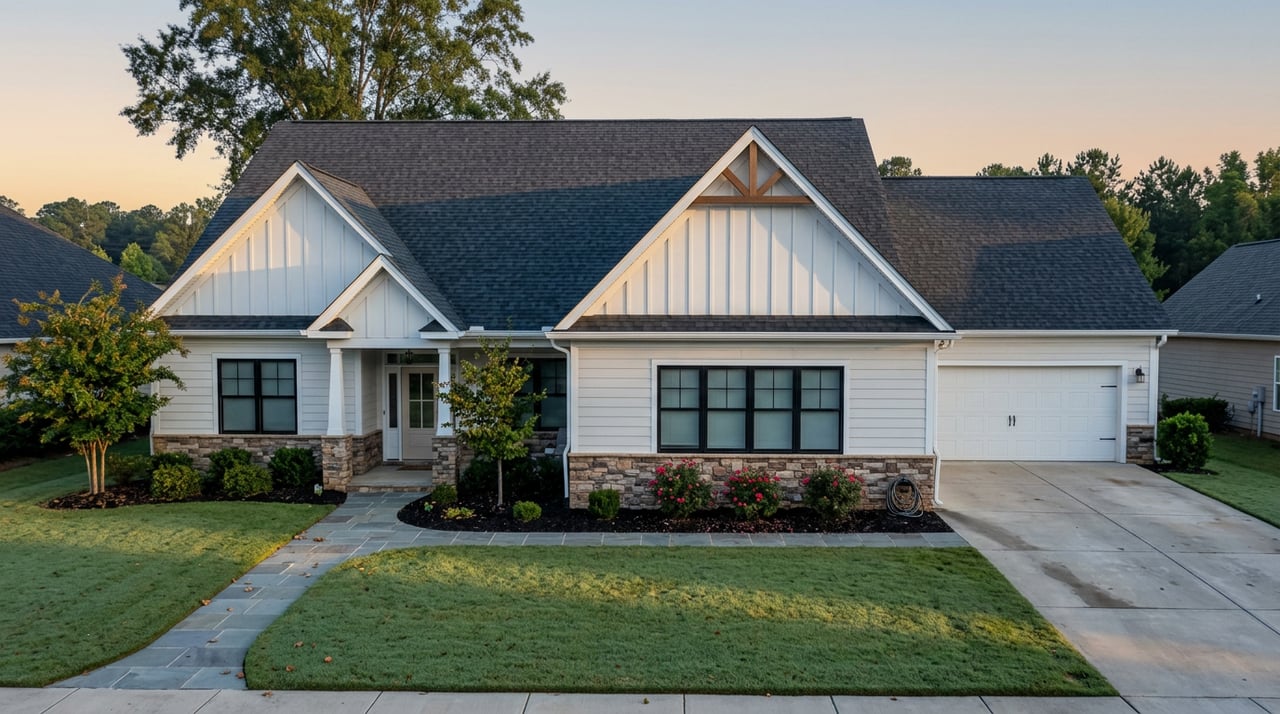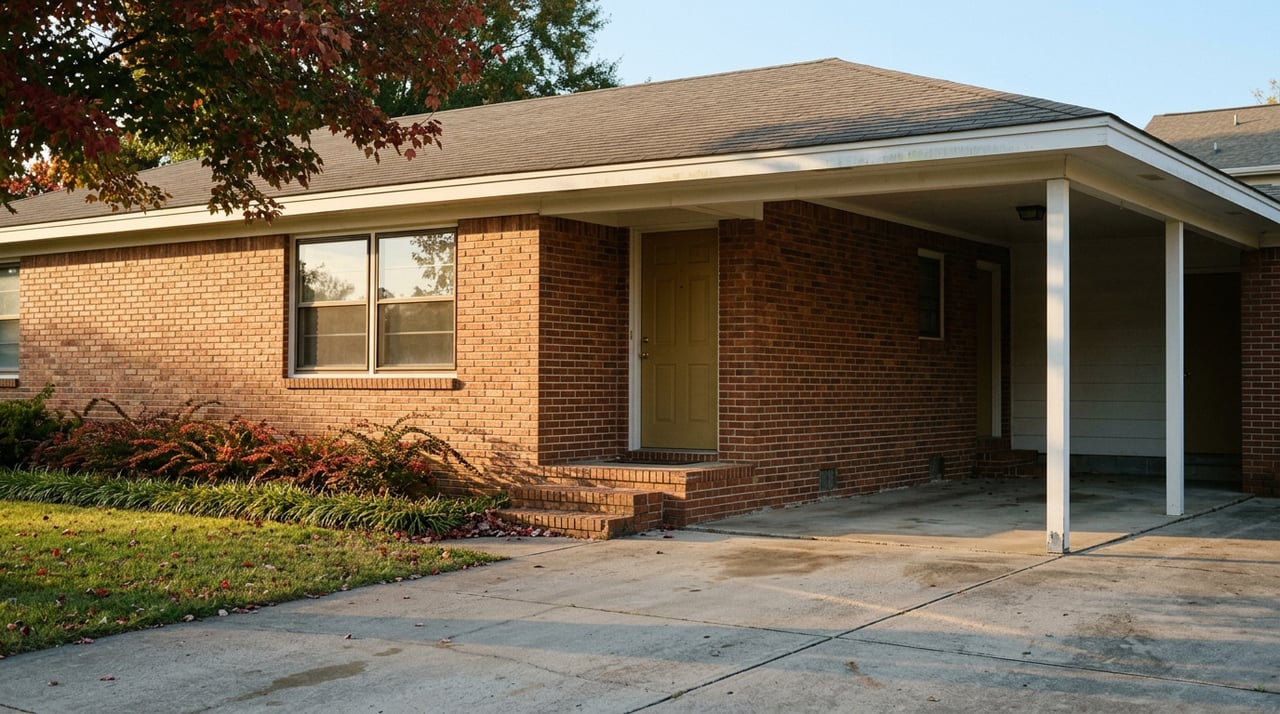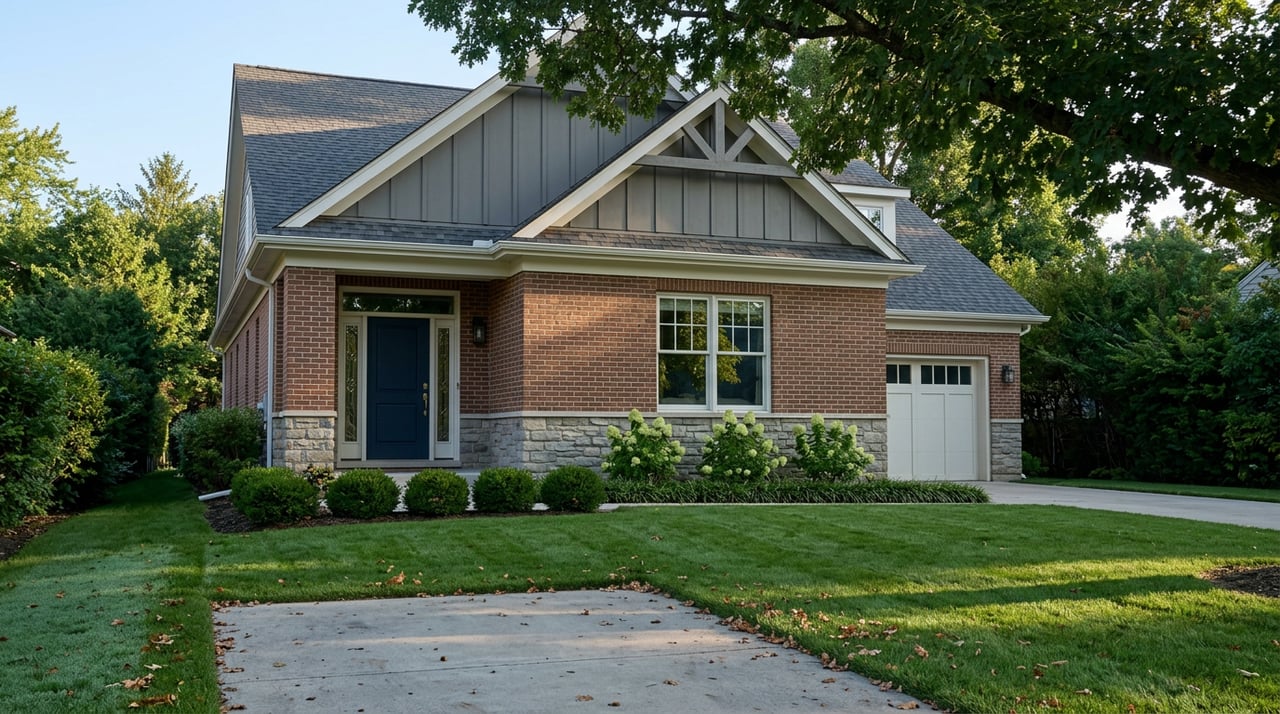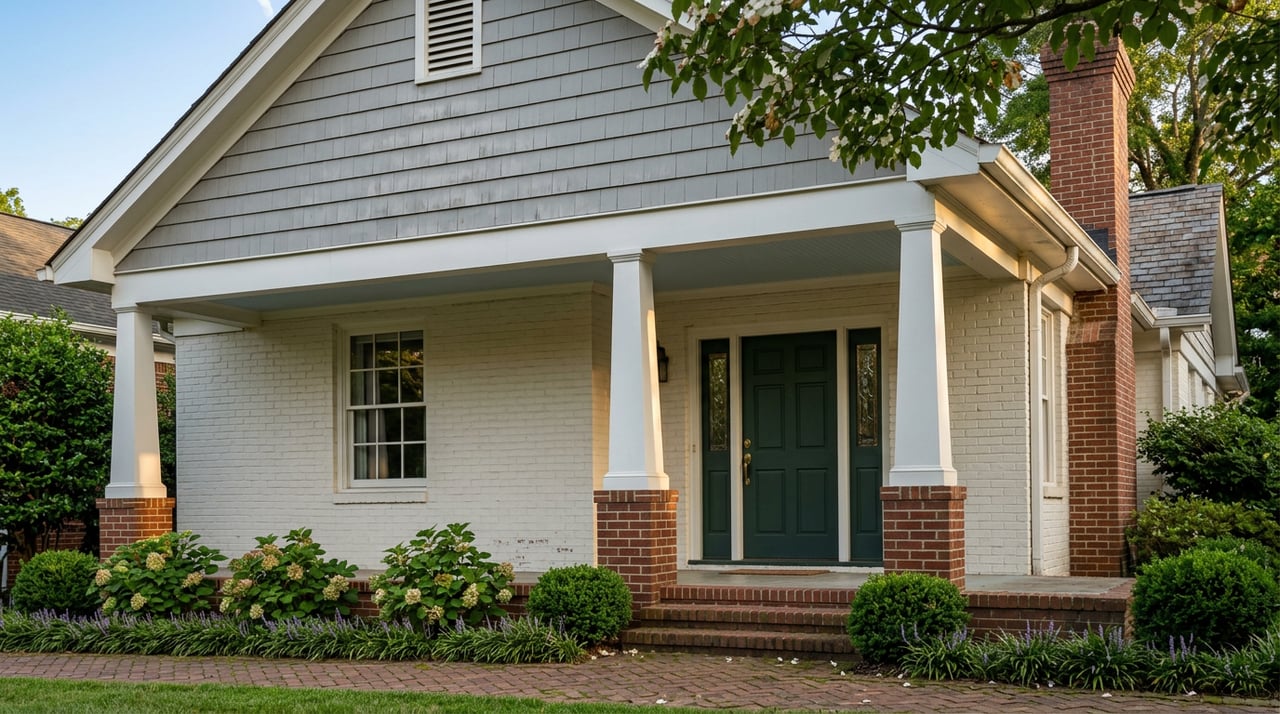
A renovated bungalow near Fletcher Park lists in January and is under contract inside a week, multiple offers, over ask. A similar Craftsman two streets over lists in February, same square footage, same walk to the Village District, and sits for nine weeks before closing under asking. Same zip code. Same school assignment. Same five roads converging at the same intersection that gave Five Points its name.
If you're shopping Raleigh's inside-the-beltline neighborhoods by median price alone, these two homes should have behaved the same way. They didn't. That gap between what the headline number promises and what actually happens on a specific street is the real story in Raleigh's priciest pockets this year, and it's a story most portal searches won't show you.
The Five Points number that doesn't add up
Raleigh's citywide market is behaving the way most people expect a normal market to behave. The median sale price sat at roughly $425,000 over the three months ending in May 2026, down slightly from a year earlier, with homes taking about 34 days to sell on average. Nothing dramatic. A market cooling gently off its pandemic-era peak.
Five Points tells a stranger story. In February 2026, the median sale price there hit $1.1 million, up 16 percent from a year earlier. Read on its own, that sounds like a neighborhood on fire. But in the same month, homes in Five Points took a median of 63 days to sell, up from just 18 days the year before. Sales volume was actually higher, 43 homes changed hands versus 31 the prior February, so this isn't a thin, illiquid pocket going quiet. It's a busier market where the same buyers who are still paying up are also taking three and a half times longer to commit.
By May, the picture had shifted again. Five Points' median had settled to just over $1 million, now down 2 percent year over year, a swing of nearly 18 percentage points in three months. That's not noise you can wave away. It's the shape of a market where price and pace have decoupled, and where the number you see on a listing site depends heavily on which month you happened to check.
A median built from three sales isn't a market signal
Hayes Barton, the historic neighborhood just north of downtown known for its tree-lined streets and Earle Sumner Draper-designed layout, makes the volatility even clearer. In January 2026, its median sale price was $1.7 million, up 50 percent from the year before. Only three homes sold that month, down from six the January prior.
By May, the reported median for Hayes Barton had fallen to roughly $1.28 million, down 38 percent year over year.
Both numbers are technically accurate. Neither is a reliable signal on its own. When a neighborhood only produces three to six closings in a given month, one custom-built French Provincial with ten-foot ceilings and natural dolomite countertops selling next to a modest 1930s stone cottage priced for a renovation can swing the reported median by half a million dollars in either direction. That's not a market cooling or heating. That's arithmetic responding to a handful of individual sellers.
If you're comparing Raleigh neighborhoods and one of them reports fewer than ten sales a month, treat the monthly median as a rough sketch, not a verdict. Ask a local agent for the actual comparable sales behind the number, not just the aggregate.
Why buyers are taking longer to say yes
Part of what's stretching Five Points' timeline is straightforward: there's more to look at before you decide. New construction has been landing in and around the neighborhood at a pace that gives buyers real alternatives to weigh against older stock. Oberlin Heights, an eleven-unit collection of new-construction townhomes near Hayes Barton, Five Points, and the Village District designed by The Raleigh Architecture Co., was nearly sold out as of this year. Roanoke Row, a small collection of architecturally distinct modern homes in Roanoke Park, has units slated for completion in June 2026. When a buyer has a choice between a century-old Craftsman with character and a brand-new build with a rooftop terrace and an elevator, both inside the same half-mile radius, the decision takes longer even when the willingness to pay doesn't shrink.
The structural pressure valve nobody's pricing in
There's a bigger force at work too, and it's not coming from inside the beltline at all. The Complete 540 project, a Triangle-area highway extension overseen by the North Carolina Department of Transportation, is in its final construction phase. The project extends the Triangle Expressway roughly 28 miles from the NC 55 Bypass in Apex to the existing I-540/I-87 interchange near Knightdale, connecting Apex, Cary, Clayton, Fuquay-Varina, Garner, Holly Springs, and Raleigh, and is expected to ease traffic on inner corridors including I-440, I-40, and NC 55. Phase 1, an 18-mile stretch from NC 55 to I-40, opened to traffic in September 2024. Phase 2 is under active construction now, with more than 50 pieces of heavy equipment working the corridor daily and completion targeted for late 2028.
You don't need a drive-time calculator to understand what a finished outer loop does to a housing market shaped like Raleigh's. For years, buyers who wanted a short commute to downtown, Research Triangle Park, or the airport had a narrow set of neighborhoods to choose from, and inside-the-beltline addresses like Five Points and Hayes Barton captured an outsized share of that demand because there wasn't a good substitute. As Complete 540 stitches together the southern and eastern arc of the county, that substitute is showing up. Buyers who might have stretched for an ITB premium five years ago now have a wider ring of connected towns to consider first.
That doesn't mean ITB prices are about to fall. Land inside the loop is fixed and the historic housing stock in neighborhoods like Oakwood and Mordecai isn't being replicated anywhere else. But it does mean the automatic urgency that used to compress days on market in these neighborhoods has a release valve it didn't have two years ago. Buyers can afford to look longer because they finally have somewhere else to look.
What this means if you're comparing Raleigh neighborhoods right now
If you're weighing an inside-the-beltline purchase against something further out, a few things are worth carrying into that decision:
- Treat any single-month neighborhood median as a data point, not a trend. Ask for the trailing twelve-month average and the actual number of closings behind it.
- In neighborhoods producing single-digit monthly sales, like Hayes Barton, price per square foot on comparable homes tells you more than the reported median ever will.
- Expect longer decision windows in Five Points and similar ITB pockets right now. A 63-day median doesn't mean the market has gone soft. It means buyers have more to compare before they act, which changes your negotiating posture on both sides of a transaction.
- Watch Complete 540's Phase 2 progress. As it nears its 2028 completion, expect the commute calculus that has favored ITB neighborhoods for decades to keep loosening, gradually, not overnight.
FAQ
Is Five Points still a seller's market in 2026? Prices are still rising on a year-over-year basis, but the stretch from 18 to 63 median days on market between February 2025 and February 2026 means sellers can no longer assume a quick, clean sale just because the neighborhood carries a premium. Pricing and presentation matter more than they did two years ago.
Why do different sources report different medians for the same Raleigh neighborhood? Timing and sample size. A neighborhood with a handful of monthly closings will show a different median depending on the exact window measured and which specific homes happened to sell. This is especially true in smaller, high-end pockets like Hayes Barton, where a single luxury renovation can move the number significantly.
Will Complete 540 make outer Wake County a better value than inside-the-beltline neighborhoods? The project is designed to ease congestion on inner corridors and connect southern and eastern Wake County towns more directly to Raleigh, RTP, and the airport. As access improves, some of the pressure that has historically pushed buyers toward ITB addresses may ease, though the fixed land supply and historic character inside the loop are not something new construction elsewhere can replicate.
If you're trying to make sense of what a specific Raleigh neighborhood's numbers actually mean for your search or your listing, that's exactly the kind of read that benefits from someone watching these blocks month to month, not just the citywide average. Rachel Greenwood and the Greenwood Collective team track these shifts across the Triangle and can walk you through what the data behind your target neighborhood is really saying. Get your free home valuation to see where your street fits into this picture.