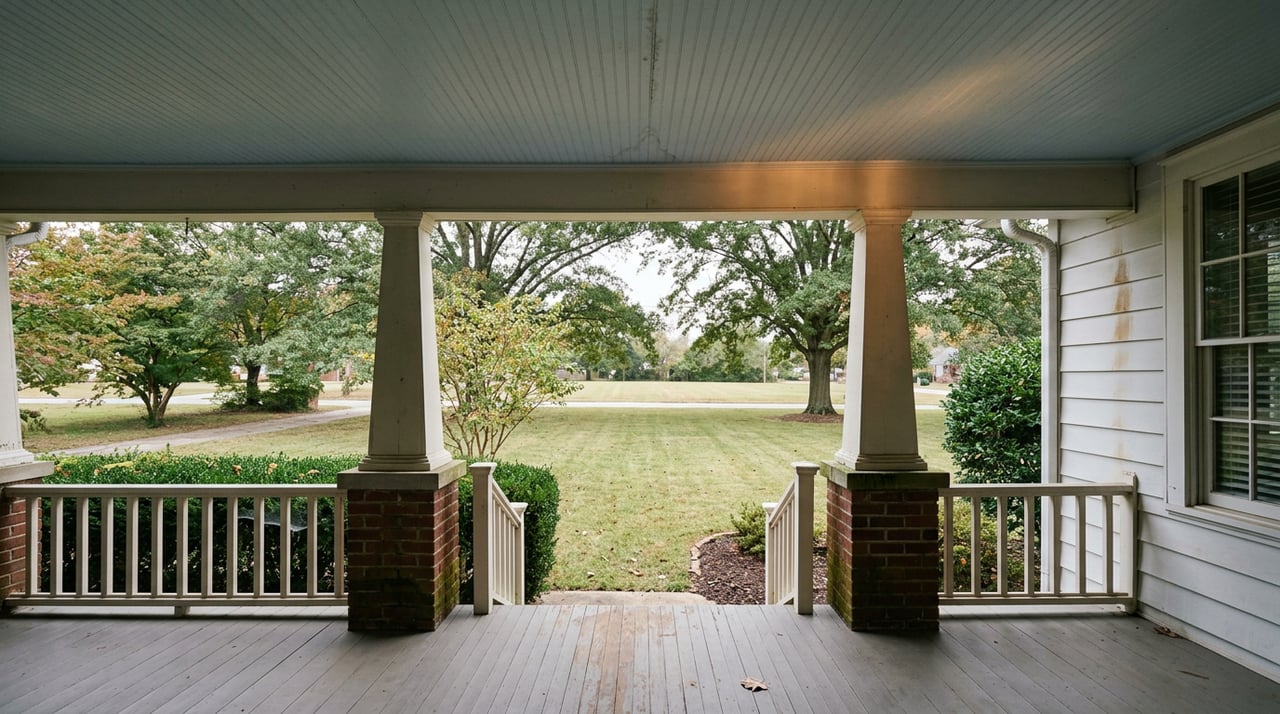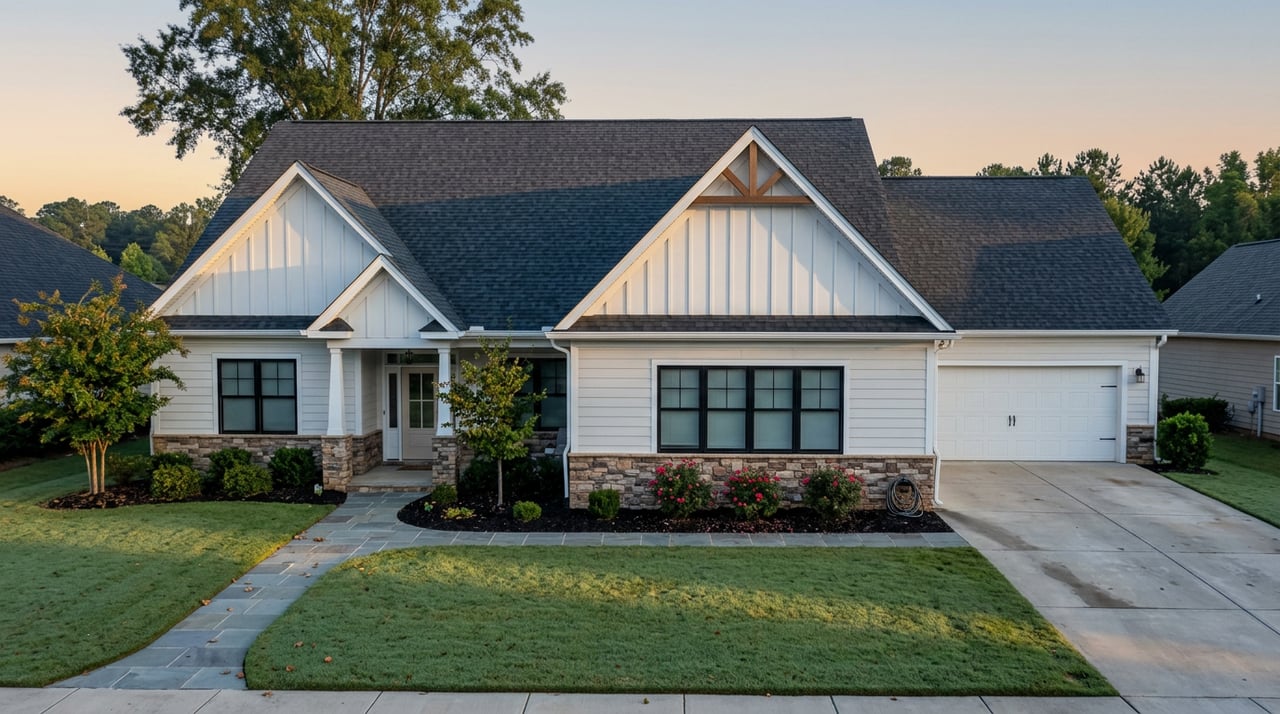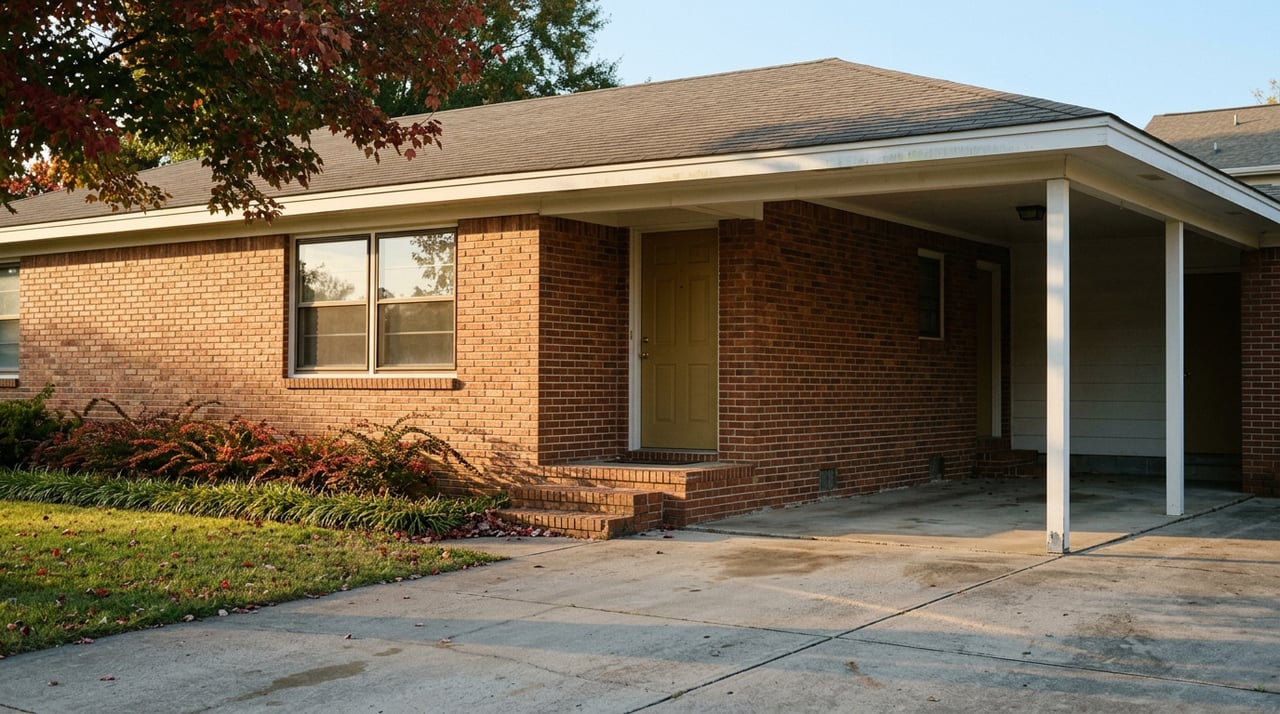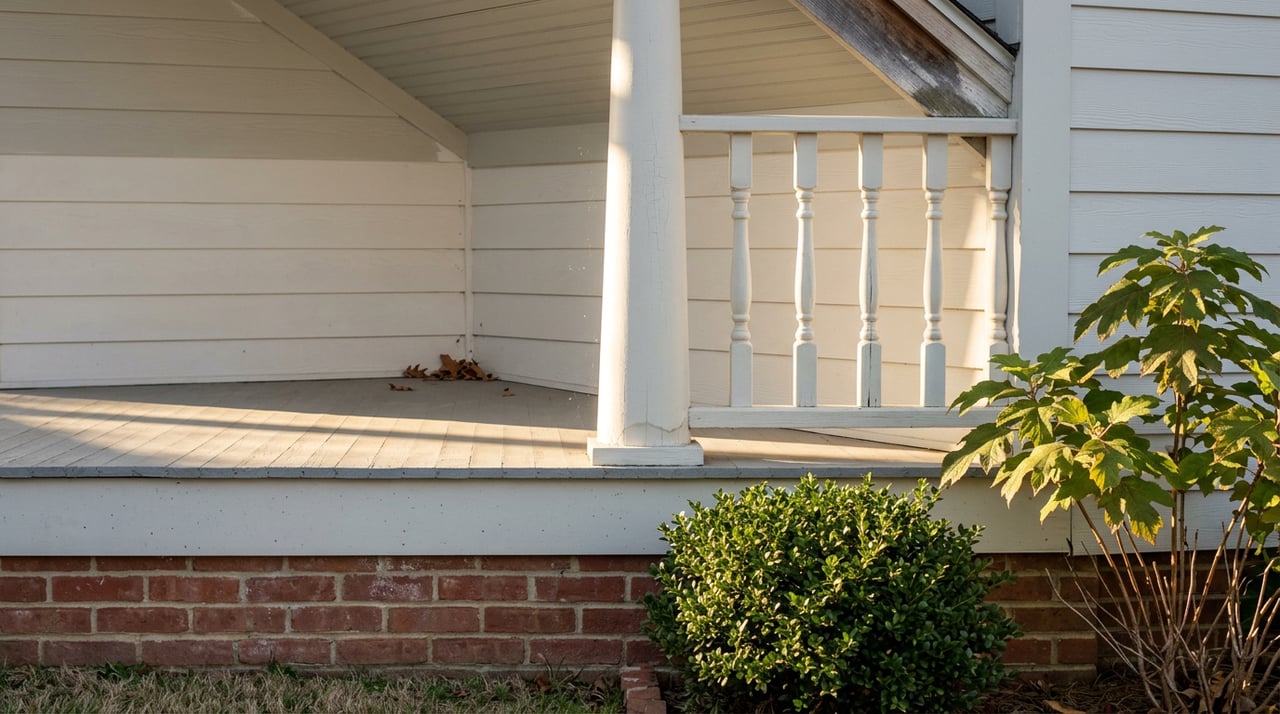
An out-of-state developer recently closed on two adjoining houses in one of Chapel Hill's historic districts. Neither sale required a public hearing, a design review, or a single conversation with the town's Historic District Commission. The Commission only found out because it started bracing for what usually comes next: demolition applications. And when those applications arrive, the same board that can spend forty minutes deciding whether a homeowner's replacement gutters match the trim has almost no power to stop the buildings from coming down. State law overrides the town's ordinance on that point, and the Commission can delay a demolition, not deny it.
That gap is the thing to understand before you buy or sell in Franklin-Rosemary, Cameron-McCauley, or Gimghoul, Chapel Hill's three local historic districts. The review process is genuinely strict about small, visible changes. It is nearly powerless against the biggest one.
What actually triggers a hearing
Chapel Hill's Land Use Management Ordinance is specific: any exterior change to a structure inside a local historic district, including new construction, alterations, restoration, or demolition of all or part of a building or wall, requires a Certificate of Appropriateness before work starts. Routine maintenance that doesn't change the design, material, or appearance of a feature is exempt, and landscaping and tree work don't need a COA at all. Everything else does, and the town does not distinguish between a house that's architecturally significant and one that simply sits inside the district boundary.
Not every COA needs a public hearing, though. Town staff can approve a defined list of minor projects without sending them to the full Commission:
- Walkways built of common red brick or Chapel Hill gravel
- Minor, non-structural projects that don't require a building permit
- Signs that don't require a separate sign permit
- Gutters painted to match the house or trim, as long as no significant architectural feature is removed
- Wood decks on the rear or side of a house, if less than 10 percent would be visible from a public right-of-way
- Fieldstone walls under three feet tall
Step outside that list, propose a two-story addition, a new garage, a pool, a fence that isn't fieldstone, and the project goes to the Historic District Commission's monthly meeting, held the second Tuesday of the month at Town Hall. Applicants present site plans and justification, the public gets to weigh in, and the Commission votes to approve, deny, or continue the item to a later meeting if it wants more information. A combined COA and Zoning Compliance Permit application currently runs $570.
For a buyer picturing a specific renovation, that fee and that calendar are the real cost of the purchase. A deck addition that clears the 10 percent visibility threshold might get approved at the staff desk in a matter of weeks. The same deck, five feet closer to the street, could sit on a public hearing agenda for a month or longer, with no guarantee of approval on the first try.
The three districts you're actually choosing between
The three local historic districts are not interchangeable, and the differences show up in what kind of house you'll find and what it will cost to own.
| District | Established | Architecture | What you'll typically find |
|---|---|---|---|
| Franklin-Rosemary | 1976 | Federal, Greek Revival, Queen Anne, bungalow, Colonial Revival | The oldest and generally the highest-priced of the three, with homes from the $800,000s into multi-million dollar territory, wide porches, and a mature tree canopy within walking distance of Franklin Street |
| Cameron-McCauley | 1990 | Bungalow, Craftsman, Colonial Revival, Tudor Revival | Built largely in the 1940s for UNC faculty and staff, smaller lots, a mix of condo conversions under $300,000 alongside larger homes reaching $800,000 to $1 million-plus |
| Gimghoul | 1990 | Colonial Revival | Only 37 houses, built in the 1920s and 1930s as faculty housing on a ridge overlooking Battle Park, with exteriors largely unchanged since their construction |
Franklin-Rosemary's price ceiling reflects proximity and scarcity as much as architecture. Cameron-McCauley is the district where a buyer can still find a one-bedroom conversion under $300,000 next door to a five-bedroom house pushing seven figures, which makes it the one place in the three districts where COA rules apply just as strictly to a modest condo as to a mansion. Gimghoul is the smallest and least likely to see turnover at all, given there are only 37 houses in the entire district.
None of these price bands change what the ordinance requires. A $280,000 condo conversion in Cameron-McCauley needs the same Certificate of Appropriateness for a new exterior door that a $1.5 million house in Franklin-Rosemary needs for the same project.
The provision that undoes all of it
Here's where the process stops behaving the way most buyers expect. The Historic District Commission can deny a fence, deny a window replacement, deny an addition. It cannot deny a demolition. State statute gives local commissions the authority to review and delay a teardown application, but not to permanently block one, a limit that exists specifically because North Carolina law does not treat historic designation as protection from demolition the way some buyers assume it does.
This is exactly the situation the town's own historic preservation watchers flagged when an out-of-state developer bought two adjoining historic homes in one of the districts. Neighbors and commissioners understood that if demolition applications followed, the Commission's only real lever would be delay, giving the town and the public more time to react, but no power to stop the outcome outright. For a buyer who assumes a historic designation guarantees the character of the block will never change, that's a hard correction.
What this means if you're buying an old house here
Before you write an offer on a house in Franklin-Rosemary, Cameron-McCauley, or Gimghoul, a few questions are worth answering before closing, not after:
Confirm which district the house sits in and whether it's a local historic district or only a National Register listing. The two aren't the same. A property on the National Register alone does not need a Certificate of Appropriateness for changes unless it's also inside one of the three local districts. Plenty of older Chapel Hill homes carry a National Register designation with no COA requirement at all, and confusing the two can lead a buyer to budget for reviews they'll never need, or skip planning for ones they will.
If you already know you want to add a deck, a garage, a fence, or an addition, ask whether the specific project falls on the staff-approval list or requires a full Commission hearing. That single distinction is the difference between a few weeks of paperwork and a multi-month public process with no guaranteed outcome.
Ask your agent or the seller whether any COA applications are pending on the property or on adjoining lots. A pending demolition application next door affects far more than aesthetics. It affects what your block looks like in two years.
What this means if you're selling
If you're preparing a historic-district listing, any exterior work you've done, from a repainted door to a rebuilt porch, should have a corresponding COA or staff approval memo on file. Buyers and their agents increasingly ask, and a missing certificate on a visible change can slow a closing while the seller scrambles to document that the work was properly approved after the fact.
FAQ
Does every old house in Chapel Hill fall under these rules? No. Only homes inside the three local historic districts, Franklin-Rosemary, Cameron-McCauley, and Gimghoul, require a Certificate of Appropriateness for exterior changes. Chapel Hill also has National Register historic districts, but properties there aren't subject to COA review unless they're also inside a local district.
Can I repaint or repair my house without a hearing? Ordinary maintenance and repair that doesn't change the design, material, or outward appearance of a feature typically doesn't require a COA at all. Landscaping and tree work are also exempt.
How long does a Certificate of Appropriateness take? Staff-delegated items, like a matching-color gutter replacement or a rear deck under the 10 percent visibility rule, can move in weeks. Anything that goes to the full Historic District Commission waits for the next monthly meeting, held the second Tuesday of the month, and can be continued to a later date if the Commission wants more information.
Can the Commission stop a demolition? It can delay one. State law prevents local commissions from permanently denying a demolition application, which is why buyers shouldn't assume historic designation protects a neighboring house from being torn down.
If you're weighing a purchase in one of Chapel Hill's historic districts, or thinking about what a COA-compliant renovation could do for your home's value before you list it, Rachel Greenwood and the Greenwood team can walk you through what a specific property will and won't let you do before you're under contract. Get your free home valuation and start with a conversation about the house, not just the paperwork.