Moving to Cary can feel exciting and a little overwhelming at the same time. If you are trying to figure out whether Cary fits your budget, timeline, and lifestyle, you are not alone. The good news is that the market is competitive, but it is also more understandable than it may seem at first glance. This guide breaks down what relocating buyers should know so you can make smarter decisions with more confidence. Let’s dive in.
Cary market at a glance
Cary remains one of the higher-priced suburban markets in the Triangle. In March 2026, Redfin reported a median sale price of $600,000, while Zillow’s March 31, 2026 data showed a typical home value of $626,396. Those numbers are not identical because they measure different things, but together they point to the same takeaway: Cary is still an expensive market.
At the same time, the market is not moving at the frantic pace many buyers remember from the peak frenzy. Redfin reported homes receiving 2 offers on average and spending about 41 days on market, while Zillow showed homes going pending in about 31 days. That gives you a little more room to evaluate options, but not so much room that you can afford to be unprepared.
Why Cary stays expensive
Part of Cary’s pricing story comes down to long-term demand. Census QuickFacts estimated Cary’s population at 182,659 in 2024, which is 4.5% higher than in 2020. The Town of Cary’s 2025 Consolidated Plan also notes that the town’s population has grown 85% since 2000.
That steady growth has supported long-term home price gains. The same Town plan says the median sales price for single-family homes was about $640,500 in July 2024, representing a 78% increase since 2014. So even though recent year-over-year pricing has softened a bit, Cary remains costly because values have climbed so much over time.
Is Cary still competitive for buyers?
Yes, but in a more balanced way than before. Redfin says Cary’s median sale price was down 4.0% year over year, and Zillow says the typical home value was down 1.7% over the past year. That suggests buyers may have a bit more breathing room than they did during the strongest bidding war period.
Zillow also reported a median sale-to-list ratio of 0.984, which signals that homes are often selling close to asking price, but not always above it. For you as a relocating buyer, that can mean more negotiating space and a better chance to make a thoughtful decision. It does not mean bargains are everywhere, but it does mean strategy matters.
What kinds of homes Cary offers
Cary’s housing stock is still largely suburban and single-family. The Town’s 2025 Consolidated Plan says 73% of the housing supply is single-family, while 27% is multi-unit housing. More than half of Cary’s roughly 70,000 housing units were built before 2000.
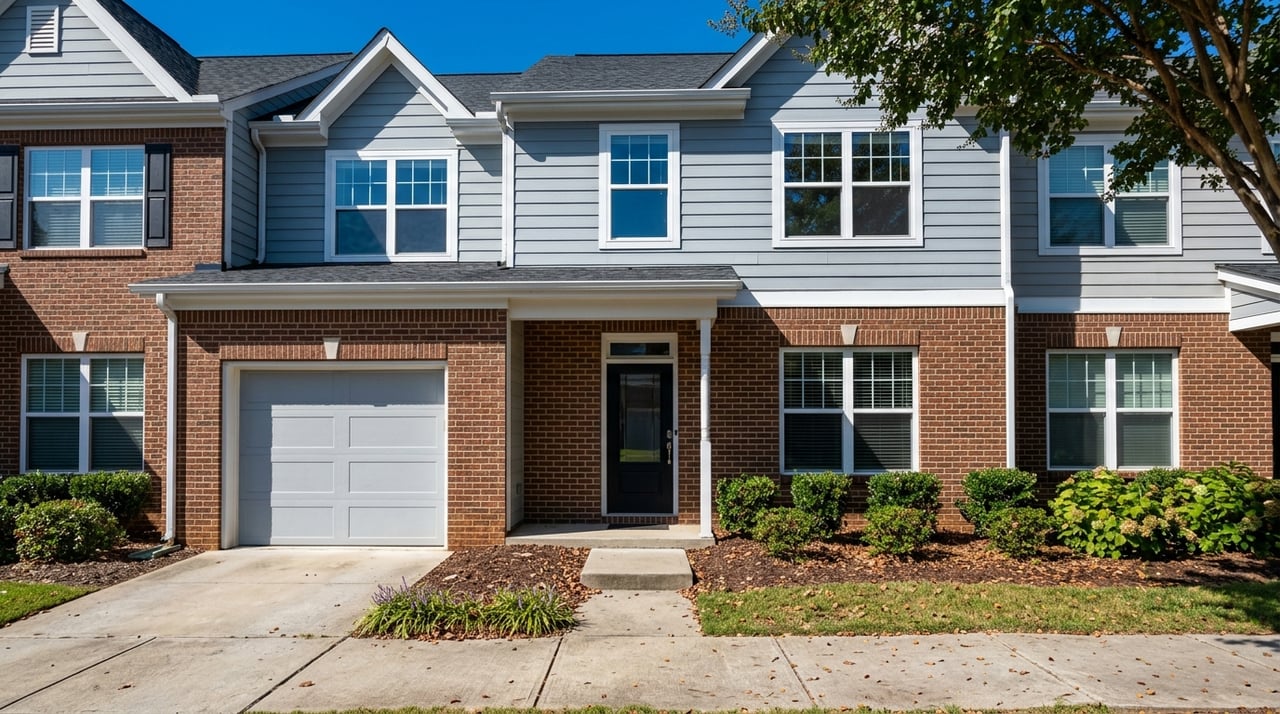
That older housing base matters because it shapes what you will actually see in your search. The Town’s 2022 Cary Housing Plan says detached single-family homes made up nearly two-thirds of Cary’s housing units in 2020, while apartments accounted for about 25%. Attached single-family homes like townhomes and duplex-style homes have been more limited, although newer higher-density housing has been added around mixed-use areas.
For many relocating buyers, this means Cary offers a familiar suburban housing profile with some variety mixed in. If you want a detached home with more space, Cary has a lot of that product. If you want lower-maintenance living, there are options, but the supply is not as dominant.
How home size affects your options
One useful shortcut for understanding Cary is the size difference between detached and attached homes. The Town’s 2022 Cary Housing Plan says the median detached single-family home is about 2,400 square feet, while attached single-family homes average about 1,200 square feet. That is a major gap.
For you, that means the home type you choose can shape your daily lifestyle as much as your purchase price. Detached homes may offer more room and a more traditional suburban setup. Attached homes may offer a lower-maintenance option and, in some cases, a lower entry point into the Cary market.
What your budget may buy in Cary
A citywide median price is helpful, but it does not tell the whole story. Cary has meaningful price variation depending on location, age of home, and updates. Recent Redfin neighborhood snapshots showed Twin Lakes around $383,000, East Cary around $518,000, and Highlands around $695,000.
That spread is important because it shows why buyers should think in terms of home type and area, not just one headline number. Two homes in Cary can deliver very different experiences and price points. Your search will likely feel more productive when you define what matters most, such as space, maintenance level, or proximity to your daily routine.
Budget range: $375K to $450K
In this range, options tend to be narrower. Based on citywide pricing and neighborhood examples, you are more likely to find attached homes, smaller older homes, or homes in less central locations. Inventory can vary from week to week, so flexibility is often key.
If this is your range, it helps to focus early on the tradeoffs you are willing to make. You may be choosing between more space, a lower-maintenance setup, or a specific part of Cary. Clarity upfront can save you time and frustration.
Budget range: $500K to $600K
This range sits closer to the center of Cary’s market. It lines up with East Cary’s recent pricing and tracks closely with the citywide median sale price and typical home value. Many buyers in this bracket are choosing between older detached homes, updated homes in established areas, and some townhome or smaller new-construction options.
For relocating buyers, this can be a practical range if you want a broader mix of choices. You may not get everything on your wish list, but you are more likely to have meaningful options. Preparation still matters because well-priced homes can attract fast attention.
Budget range: $650K and up
At this level, buyers typically move into larger detached homes or higher-priced pockets of Cary. Highlands, at roughly $695,000, is one example of how some areas sit above the citywide median. More square footage, newer updates, and stronger location premiums often show up in this range.
If your budget stretches here, you may have more flexibility on features and layout. Even so, pricing can still vary a lot based on condition and location. A clear strategy helps you avoid overpaying for cosmetic appeal without understanding the broader market context.
How Cary compares to nearby cities
If you are relocating to the Triangle, Cary is often viewed as a premium suburban option. Redfin’s March 2026 data showed Cary at a $600,000 median sale price, compared with $634,000 in Apex, $420,000 in Raleigh, $425,000 in Durham, and $576,000 in Morrisville. In simple terms, Cary is much more expensive than Raleigh and Durham, broadly in line with Apex, and near Morrisville depending on the metric.
That comparison matters because many relocating buyers start with a regional search, not just one town. If Cary feels expensive, that reaction is supported by the data. The question is whether Cary’s housing profile, pace, and product mix match what you want well enough to justify the higher price point.
What relocating buyers should do first
The current market rewards buyers who are both prepared and patient. With homes typically moving in about 31 to 41 days and Zillow showing 407 homes for sale, you may have more options than you expect. Still, the best homes can move quickly, especially if they are well-priced.
A smart relocation plan usually includes:
- Getting financing lined up early
- Narrowing your must-haves versus nice-to-haves
- Starting your search before your move date
- Being ready to act when the right home appears
- Staying flexible on cosmetic updates or exact location
This is not a market where you need to rush into every listing. It is also not a market where waiting for a dramatic price drop is likely to be the best strategy. Right now, Cary appears to favor buyers who combine readiness with realistic expectations.
A practical way to read the Cary market
If you are moving from out of state, it helps to think of Cary as a market with premium pricing, meaningful choice, and slightly improved buyer breathing room. It is still expensive, and detached homes remain a major draw. But recent softening in price trends and a moderate pace of sales create a more manageable environment than many buyers expect.
That means your goal should not be to time the market perfectly. Your goal should be to understand what your budget can realistically buy, where you may need to compromise, and how quickly you can move when a home checks the right boxes. When you approach Cary that way, the market becomes much easier to navigate.
If you are planning a move to Cary and want local guidance that is responsive, clear, and tailored to your goals, connect with Rachel Greenwood for help building a smart relocation plan.
FAQs
What is the current home price trend in Cary for relocating buyers?
- Cary remains a higher-priced Triangle market, with a March 2026 median sale price of $600,000 and a typical home value of $626,396, while recent year-over-year data shows slight softening rather than sharp declines.
What types of homes are most common in Cary for homebuyers?
- Cary’s housing stock is mostly single-family, with 73% single-family housing and 27% multi-unit housing, so buyers will see many detached suburban homes along with some townhomes, apartments, and other attached options.
What budget do you need to buy a home in Cary?
- A budget around $500,000 to $600,000 is closer to the center of the Cary market, while $375,000 to $450,000 may require more flexibility and $650,000 or more often opens the door to larger detached homes or higher-priced pockets.
How fast are homes selling in Cary right now?
- Recent data shows homes going pending in about 31 days and spending around 41 days on market, which is competitive but slower than the peak frenzy years.
How does Cary compare with Raleigh and Durham for home prices?
- Cary is substantially more expensive than Raleigh and Durham based on recent median sale prices, which is why many relocating buyers compare budget, home type, and lifestyle goals across the broader Triangle before choosing where to focus.
Is Cary a good option for buyers relocating to the Triangle?
- Cary can be a strong fit if you want a suburban housing profile, a large share of detached homes, and a market that offers more breathing room than the peak bidding-war period, but your budget will likely need to be higher than in some nearby cities.