If you are selling in Chapel Hill, staging is not just about making your home look nice. It is about helping buyers quickly understand how the space works for real life. In a market shaped by education, health care, commuting patterns, and relocation, buyers often respond best to homes that feel flexible, organized, and easy to live in. This guide will show you how to stage your Chapel Hill home in a way that supports both in-person showings and online marketing. Let’s dive in.
Why staging matters in Chapel Hill
Chapel Hill has a housing market shaped by institutions, commuting, and a highly educated workforce. According to the Town of Chapel Hill’s housing assessment, 70% of the local workforce is in education and health care, and the town has 2.24 jobs per housing unit. That means many buyers are looking for a home that supports busy schedules, practical routines, and flexible day-to-day use.
That context matters when you prepare your listing. Instead of highly themed decor or overly personalized styling, your staging should focus on clarity, flow, and function. Buyers need to see where they would relax, work, host guests, and manage everyday life.
Focus on function first
In Chapel Hill, practical staging usually performs better than decorative staging alone. Many buyers are balancing commuting, hybrid work, or relocation, so they want spaces that feel easy to understand at a glance. A clean, neutral, well-scaled room often creates more impact than a heavily styled one.
This is especially important because Chapel Hill has a mixed-age housing stock. The town reports that nearly 40% of homes were built between 1980 and 1999, while less than 25% were built since 2000. If your home is older, staging should help it feel current, cared for, and efficient rather than trying to make it look brand new.
Stage the rooms buyers notice first
National staging data points to a clear starting place. NAR’s 2025 Profile of Home Staging found that the living room, primary bedroom, and dining room are the rooms most commonly staged. Those spaces should get the most attention in your Chapel Hill listing.
Living room
Your living room should feel open, bright, and easy to navigate. Remove extra furniture, clear out small decor pieces, and create a layout that shows conversation space and traffic flow. If the room feels crowded in person, it will usually look even smaller in photos.
Use this room to communicate simplicity and comfort. Neutral textiles, clear surfaces, and balanced furniture placement can help buyers focus on the room itself instead of your belongings. The goal is to make the space feel flexible enough for quiet evenings, guests, or everyday downtime.
Primary bedroom
The primary bedroom should feel calm and spacious. Keep bedding simple, reduce furniture to the essentials, and make sure nightstands and dressers are mostly clear. Buyers tend to respond well to rooms that feel restful and uncluttered.
Storage also matters here. If closets are packed, buyers may assume the home lacks enough storage overall. Edit your clothing and personal items so the room and closet feel more functional.
Dining area
Your dining area does not need elaborate styling. It just needs to clearly show its purpose and scale. A clean table, a few coordinated chairs, and open sight lines can help buyers understand how the space connects to the kitchen and living areas.
In Chapel Hill, where buyers may value efficient daily use over formal presentation, a dining room should feel practical. If it can support both everyday meals and occasional hosting, that is often enough.
Show flexible space clearly
One of the smartest staging moves in Chapel Hill is giving every extra room a clear use. NAR reporting shows buyers respond to flexible spaces for home offices or guests, and floor plans are useful to many online shoppers. If you have a loft, den, bonus room, or spare bedroom, do not leave it undefined.
Stage each flex space with one strong purpose. That could be a home office, guest room, reading nook, or study area. A buyer can imagine a second use later, but they usually need help understanding the room first.
Create a real work-from-home setup
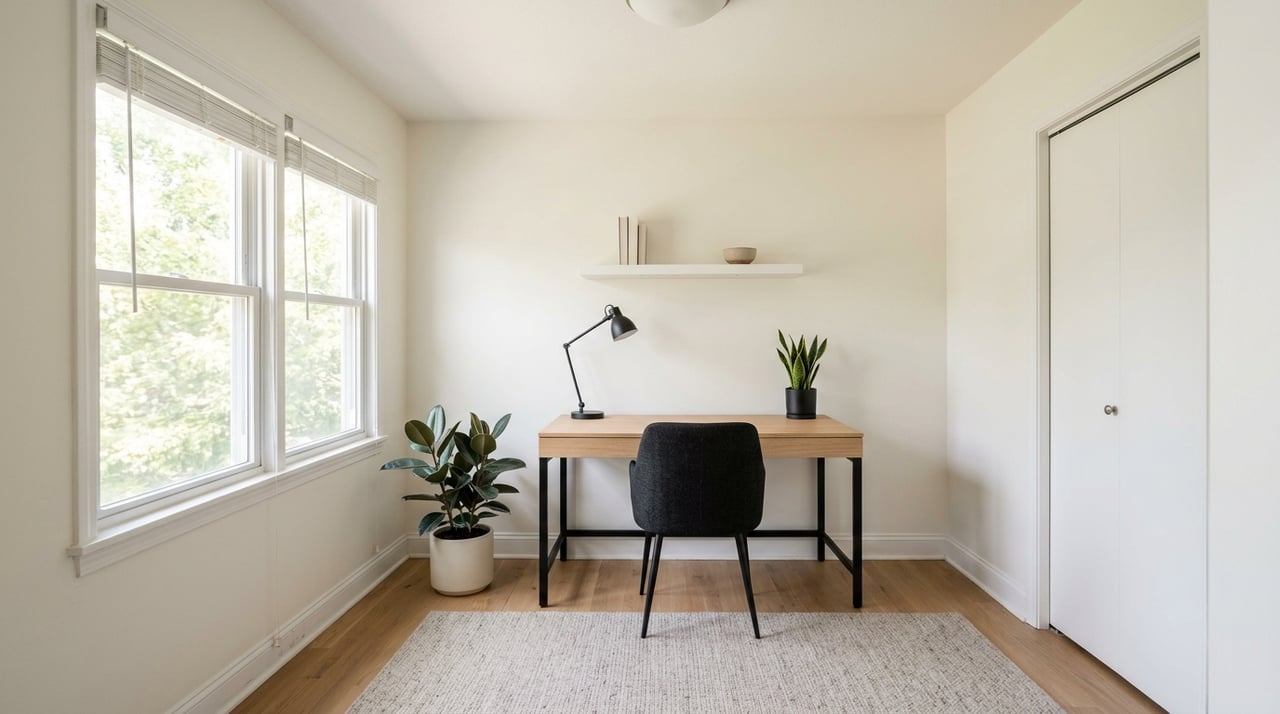
Work-from-home staging has become especially relevant in this market. UNC Health says it supports remote, hybrid, and onsite work arrangements, which reinforces the value of adaptable rooms. Even a small desk, a task lamp, and a clean background can make a room feel more useful.
If you have an awkward corner or small alcove, consider turning it into a compact workspace. That simple visual cue can help buyers see possibility instead of wasted square footage. In listing photos and showings, clearly defined function often makes a stronger impression than empty space.
Do not overlook parking and access
Parking should be part of your staging strategy, not an afterthought. The Town of Chapel Hill highlights multiple park-and-ride locations, including Southern Village, Friday Center, Eubanks, and Jones Ferry, and notes a planned Bus Rapid Transit corridor connecting Eubanks Road and Southern Village. In a market where commuting and access matter, buyers notice how parking works.
That means your driveway, garage, and parking pad should look clean and usable in both photos and in person. Remove bins, sports gear, and overflow storage if possible. If you have a garage, stage it to show that a car can actually fit inside.
Clear access also helps buyers picture everyday routines. A tidy front walk, uncluttered entry, and simple parking setup can make the whole property feel easier to live in. That sense of ease starts before a buyer even opens the front door.
Make older homes feel current
Because much of Chapel Hill’s housing stock is not new, staging should highlight upkeep and usability. Buyers do not need every finish to be brand new, but they do want to see that the home feels organized and well presented. Clean lines, fresh light, and a simple layout can go a long way.
Start by removing anything that dates the space visually or distracts from the room. Heavy drapes, oversized furniture, and crowded shelves can make an older home feel more tired than it is. Lighter window treatments, edited surfaces, and a more open layout can help the home show better without overdoing it.
Presentation also helps justify value. The Town of Chapel Hill reported a median home value of $435,500 as of 2020 and noted constrained housing supply. In that kind of market, buyers want to quickly understand what makes a home worth its price.
Stage for online buyers first
A large share of buyers begin online, so your home needs to read well on screen before it ever gets a showing. NAR’s 2025 Generational Trends report found that 43% of buyers said looking online was their first step, 51% found the home they bought on the internet, and 83% said photos were the most useful website feature. Floor plans and virtual tours also ranked highly.
This matters because staging for photos is not exactly the same as staging for daily life. Space can feel flatter on camera, and clutter becomes more obvious. Your home should look bright, easy to understand, and visually calm in every key image.
What to prioritize for photos
Before photography, focus on the features buyers want to understand quickly:
- Natural light
- Room size and layout
- Clear furniture placement
- Flex-space function
- Outdoor living areas
- Parking and entry access
- Storage and organization
NAR’s listing guidance notes that staging matters because space does not always translate well to the camera. The goal is not to create a dramatic image. It is to make each room feel useful, balanced, and easy to interpret.
A simple Chapel Hill staging checklist
If you want a practical plan, start here:
- Declutter the living room, primary bedroom, and dining area first
- Define every bonus room, loft, den, or spare bedroom
- Add a simple work-from-home setup where it fits naturally
- Remove excess furniture to improve flow
- Open blinds and maximize natural light
- Clear kitchen and bathroom counters
- Organize closets and visible storage areas
- Clean up the driveway, garage, and front entry
- Make outdoor spaces look neat and low maintenance
- Prepare the home for photography with a simple, neutral look
You do not need to stage every room perfectly. In most cases, the best return comes from making the main living spaces and the most useful flex areas easy to understand both online and in person.
What buyers want to understand fast
In Chapel Hill, many buyers are likely evaluating more than style alone. They may be relocating, balancing hybrid work, or comparing commute options across the Triangle. Your staging should answer practical questions quickly.
That includes whether the home has usable office or guest space, how parking works, what feels updated, and how the layout supports daily routines. When your home feels clear and functional, buyers can focus on its value instead of trying to solve puzzles during the showing.
Thoughtful staging is really about reducing friction. It helps buyers see themselves in the home faster, and that can make your listing feel more memorable in a competitive market.
If you want a staging plan that matches how Chapel Hill buyers actually shop, Rachel Greenwood and the Greenwood team bring local insight, polished marketing, and hands-on listing support to help your home stand out.
FAQs
Which rooms should you stage first in a Chapel Hill home?
- Start with the living room, primary bedroom, and dining area, then prioritize any flex space that can function as an office, guest room, or study area.
Do you need to stage every room before listing a Chapel Hill property?
- Usually no. Focus on the main living areas and any extra spaces that help buyers understand how the home can support everyday life.
Why does parking matter when staging a Chapel Hill home?
- Parking and access are part of daily function in Chapel Hill, especially in a market shaped by commuting patterns, park-and-ride options, and key transportation corridors.
How should you stage an older Chapel Hill home?
- Present it as functional, organized, and well cared for by using lighter styling, fewer distractions, and clear room purposes rather than trying to mimic new construction.
How important are listing photos for staged homes in Chapel Hill?
- They are extremely important because many buyers start online, and buyers consistently rank photos among the most useful parts of a property listing.
What makes a flex space more appealing to Chapel Hill buyers?
- A defined setup such as a desk for work, a bed for guests, or a reading chair for quiet use helps buyers quickly understand how the space could fit their routines.