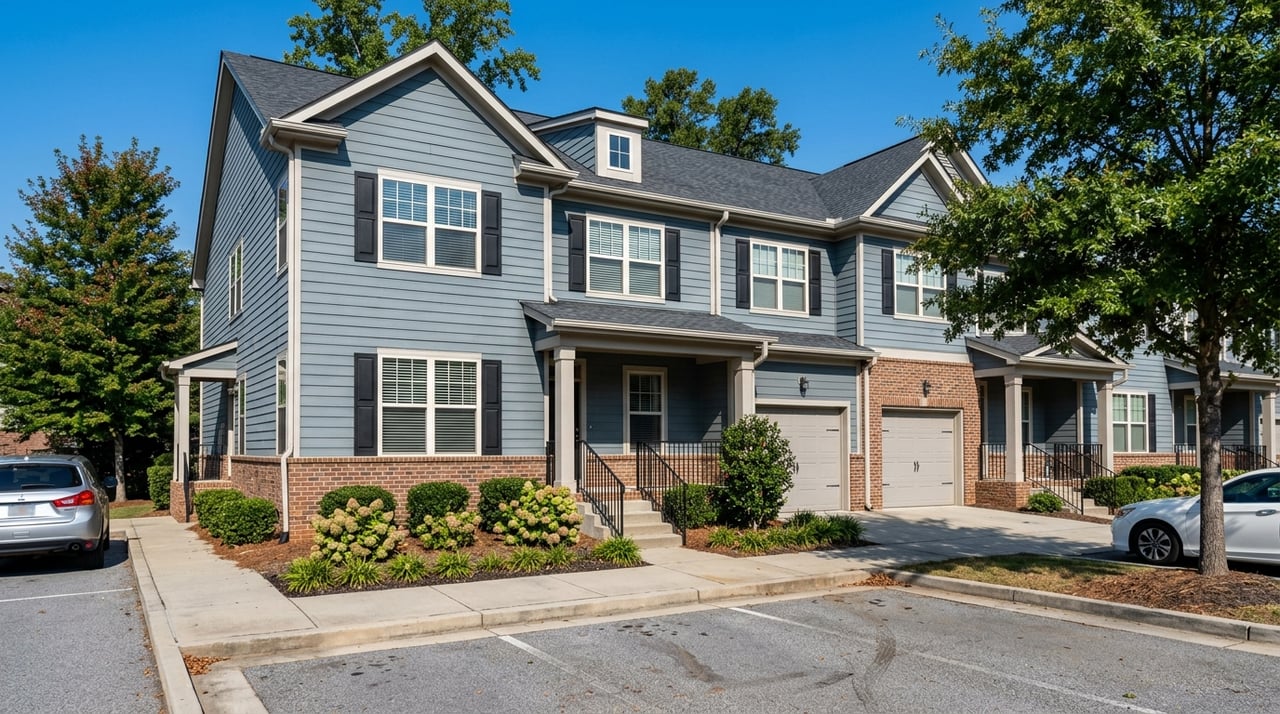
Looking for a low-maintenance home in Chapel Hill but not sure whether a condo or townhome makes more sense? You are not alone. For many buyers, attached housing offers the right mix of convenience, location, and value, but the details can vary a lot from one community to the next. This guide will help you compare Chapel Hill condos and townhomes, understand current price ranges, and focus on the costs and lifestyle factors that matter most. Let’s dive in.
Chapel Hill attached housing at a glance
If you are comparing condos and townhomes in Chapel Hill, the first thing to know is that the market has a clear price gap between the two. Current public listing data shows 113 condos for sale at a median listing price of $290,000 and 61 townhouses for sale at a median listing price of $475,000. Townhomes are also moving a bit faster, with a typical market time of 34 days compared with 45 days for condos.
That gap reflects what many buyers expect to find. Condos often offer a lower entry price and easier upkeep, while townhomes usually provide more interior space, more parking, and a more house-like feel. If your goal is to stay in Chapel Hill while managing budget, maintenance, and commute priorities, both options deserve a close look.
Why condos appeal in Chapel Hill
Condos are often a strong fit if you want convenience and less day-to-day maintenance. In Chapel Hill, they can work especially well for professionals, downsizers, and buyers who want easier access to UNC, downtown, or transit. The lower median listing price also makes condos an important option for buyers who want to enter the market without stretching into detached-home pricing.
Current listings show a wide range of condo price points. More accessible examples include units like 1034 Arborgate Circle at $244,900, 220 Elizabeth Street Unit B4 at $259,900, and 700 Martin Luther King Junior Boulevard Unit A4 at $318,000. That range gives buyers room to prioritize either price, location, or amenities.
Not every condo is in the urban core. A listing at 1002 Willow Drive is described as being on the main bus line and within walking distance of UNC, downtown, shopping, restaurants, and theaters. Its HOA includes exterior maintenance, landscaping, and pool access, which shows how some condo communities can offer convenience without requiring a downtown budget.
Downtown condo pricing and perks
If you want the most walkable condo lifestyle in Chapel Hill, downtown is where the premium shows up. Public data shows 6 condos for sale in Downtown Chapel Hill with a median listing price of $720,000, and the neighborhood's recent median sale price was $975,000. Franklin Street and Rosemary Street command some of the highest prices because they put you close to campus, dining, retail, and daily conveniences.
Downtown condo listings often include features that are harder to find elsewhere. Depending on the building, you may see garage parking, rooftop terraces, fitness centers, concierge service, storage, and sky lounges. Those amenities can be appealing, but they usually come with higher HOA dues.
What condo HOA fees can include
When you compare condos, list price is only part of the picture. In current downtown listings, HOA dues range from $584 per month to $738 per month. One listing notes that dues include water, heated water, sewer, natural gas, sky lounge access, and gym access.
That is why it helps to look beyond the monthly number and ask what the dues actually cover. In some buildings, the HOA may absorb several utility and maintenance costs that would otherwise come out of your pocket. In others, the dues may be high without reducing many of your monthly expenses.
Why townhomes attract many buyers
Townhomes often appeal if you want more space and a more residential layout without taking on full detached-home maintenance. In Chapel Hill, they tend to suit buyers who want attached garages, multiple parking options, and less yard work while staying connected to the town's amenities and transit options. For many buyers, that balance is the biggest draw.
Current public listings range from $335,000 at 13 Vauxhall Place and $359,900 at 104 Old Stable Court to $499,995 at 911 North Columbia Street, $699,000 at 1129 Booth Park Boulevard, and $1.85 million at 217 Oval Park Place. That spread shows how broad the townhome category can be, from more entry-level options to premium, location-driven properties.
Parking is another reason buyers often prefer townhomes. For example, 10 Clover Drive advertises two garage spaces and four additional parking spaces. If you have multiple drivers, want guest parking, or simply want to avoid the friction of downtown parking, that can make a real difference in daily life.
Southern Village and Meadowmont townhomes
Two of the best-known townhome settings in Chapel Hill are Southern Village and Meadowmont. These communities tend to attract buyers looking for a more residential feel, along with nearby shops, dining, and community amenities. They offer a different rhythm than downtown, while still keeping you connected to Chapel Hill.
In Southern Village, a recent listing at 302 Edgewater Circle describes a duplex-style townhome with three private decks, wooded HOA land, and walking access to dining and entertainment. That listing also showed a $488 annual HOA fee and noted that each owner maintains their own exterior. Another Southern Village townhome at 206 Brookgreen Drive is described as being steps from the village green and nearby shops and restaurants, with $215 per month HOA dues.
In Meadowmont, current townhome listings highlight assigned parking, a community pool, landscaped grounds, and proximity to Meadowmont shops, dining, UNC, and the UNC Wellness Center. If you want a neighborhood feel with easier access to everyday amenities, these communities are often worth watching.
Condos vs townhomes: key tradeoffs
If you are choosing between the two, the best fit usually comes down to how you want to live day to day. Price matters, of course, but so do parking, upkeep, and the level of privacy or shared amenities you want.
| Feature | Condos | Townhomes |
|---|---|---|
| Typical median list price | $290,000 | $475,000 |
| Typical pace | 45 days on market | 34 days on market |
| Maintenance | Often lower owner maintenance | More owner responsibility may apply |
| Parking | Can be limited or structured | Often easier parking, garages more common |
| Lifestyle fit | Good for convenience and car-light living near UNC or downtown | Good for more space and a residential feel |
| HOA structure | Often covers more shared services and exterior items | Can vary widely by community |
A condo may be the better choice if you want the simplest ownership experience and are comfortable with shared walls, shared amenities, and potentially higher monthly dues. A townhome may be the better fit if you want more room to spread out and value parking or storage more than a central location.
HOA documents matter more than many buyers expect
In North Carolina, condominium ownership is governed by Chapter 47C, and many planned communities that include townhomes are governed by Chapter 47F. For condos, the public offering statement must disclose key documents such as the declaration, bylaws, rules, contracts or leases, current budget, insurance, and related fees. Buyers also have a seven-calendar-day right to cancel after contract execution.
That makes document review a major part of the buying process, not just a formality. You will want to verify what dues cover, review the budget and balance sheet, and check for issues like special assessments, parking rules, exterior maintenance responsibilities, and rental limits. Two homes with similar prices can have very different long-term carrying costs depending on how the association is run.
Why HOA costs vary so much
Townhome HOA dues in Chapel Hill can vary widely based on age, amenities, and maintenance structure. Public listings currently show examples as low as $89 per month for an end-unit townhome, $160 per month for a newer townhome, $192 per month in Briar Chapel, and $478 per month in a more amenity-heavy Briar Chapel townhome with access to a pool, playground, gym, green space, and trails.
That variation is a good reminder not to judge an HOA fee by the number alone. A lower monthly fee may mean you are responsible for more exterior upkeep. A higher fee may cover services or amenities that reduce other expenses or better match your lifestyle.
Parking and transit can shape your decision
Parking can change the real cost of living, especially closer to downtown. Chapel Hill's parking fee schedule sets on-street parking at $2 per hour, allows eligible homes in the residential parking permit zone up to five annual permits at $25 each, and allows special-event parking rates up to $30. If your building or community does not offer enough parking, these details can affect your budget and convenience.
For buyers who commute or want a car-light lifestyle, transit is a real factor in Chapel Hill. Chapel Hill Transit is fare-free, and UNC says the U and RU campus routes circulate weekdays every 10 to 15 minutes. Park-and-ride permits cost $2 per day, $21 per month, or $250 per year, with lots at Eubanks Road, Jones Ferry, and Southern Village.
Walkability changes by area
Chapel Hill is not equally walkable in every part of town. The citywide Walk Score is 34, while Downtown Chapel Hill is 77 and Meadowmont is 45. If you want to run errands, get to campus, or enjoy dining and entertainment without driving every time, staying closer to downtown usually offers the most flexibility.
That is one reason downtown condos often cost more. If your priority is easy walkability and less parking friction, a central condo may be worth the premium. If you prefer quieter streets, easier parking, and a more residential setting, a townhome in places like Southern Village or Meadowmont may feel like the better everyday fit.
How to choose the right fit for you
The best Chapel Hill condo or townhome is the one that supports how you actually live. If you want a lower-maintenance setup, easier access to UNC, and the possibility of a lower purchase price, condos deserve serious attention. If you want more living space, more parking, and a more traditional neighborhood feel, townhomes may be the stronger option.
As you compare homes, focus on the full picture. That includes price, HOA dues, what the HOA covers, parking setup, transit access, and how much maintenance responsibility you want to keep. Those factors often matter just as much as square footage.
If you want help narrowing down the right attached home in Chapel Hill, Rachel Greenwood can help you compare communities, break down true monthly costs, and move forward with confidence.
FAQs
What is the difference between condos and townhomes in Chapel Hill?
- Condos in Chapel Hill usually offer a lower median listing price and less owner maintenance, while townhomes often provide more space, more parking, and a more residential feel.
What is the median price for Chapel Hill condos and townhomes?
- Current public listing data shows a median listing price of $290,000 for condos and $475,000 for townhouses in Chapel Hill.
Are downtown Chapel Hill condos more expensive?
- Yes. Downtown Chapel Hill condos currently have a median listing price of $720,000, and the neighborhood's recent median sale price was $975,000.
What do Chapel Hill HOA fees usually cover?
- Coverage varies by community, but condo HOA dues may include items like exterior maintenance, landscaping, water, sewer, natural gas, pool access, gym access, or other shared amenities.
Are Chapel Hill townhomes cheaper to own than condos?
- Not always. Townhomes may have lower or higher HOA dues depending on the community, and some owners may be responsible for more exterior maintenance, so it is important to compare total monthly cost.
Is Chapel Hill a good place for car-light condo living?
- It can be, especially near downtown and UNC. Chapel Hill Transit is fare-free, downtown has a higher Walk Score than the town overall, and park-and-ride options are available in several locations.
What should buyers review before buying a Chapel Hill condo?
- Buyers should review association documents, confirm what dues cover, check the budget and balance sheet, and look for details about parking, maintenance responsibilities, special assessments, and rental limits.